Regular Maintenance is the critical factor
Fluid contamination is the leading cause of hydraulic system failure, responsible for up to 75% of all issues.
Clean hydraulic oil and properly serviced filters are essential for protecting pumps, valves, cylinders, and motors. Regular hydraulic maintenance to your New Holland Bale Wagon and Stackcruiser helps prevent system failures, ensuring equipment reliability and longevity. As a matter of fact checking oil level and condition regularly, replace filters according to the equipment manufacturer’s schedule or filter-restriction indicator, and change hydraulic fluid at the OEM-recommended interval or based on oil analysis. Dust, heat, water, heavy loads, and frequent use may require shorter service intervals. Never rely on a universal hour interval—always follow the machine manual and use the correct fluid and filter specification.
See the article below [Read more] for more direction to lessen hydraulic failures.
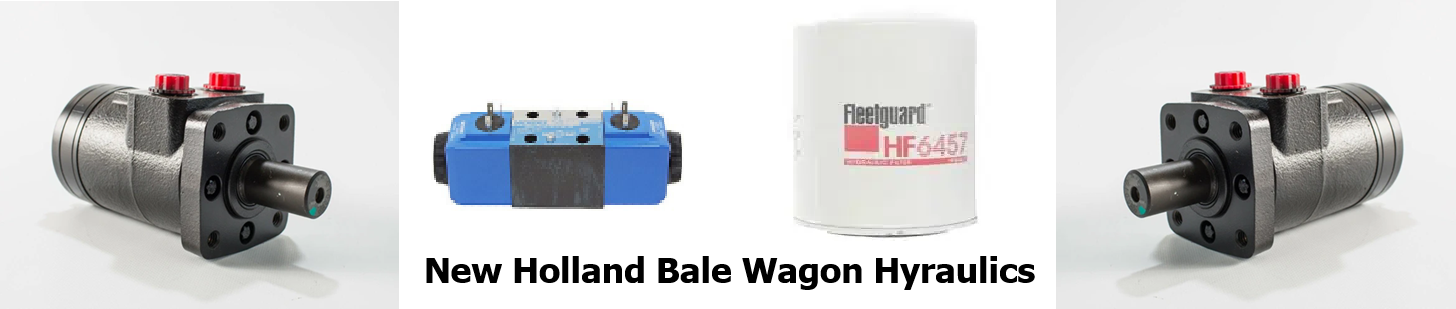
Get your New Holland Bale Wagon Hydraulic Filters here at Emerson Ag. Follow this link to add Hydraulic Filters to your next motor change.
1 year warranty. Questions? Please Contact Us.
Hydraulic Fluid & Filter Maintenance
Hydraulic oil does much more than transfer power, unquestionably, It lubricates moving parts, helps control heat, protects against corrosion, and carries contamination to the filters. Clean, correct hydraulic fluid helps equipment operate smoothly and protects costly pumps, valves, cylinders, and hydraulic motors.
Hydraulic filters remove damaging dirt, metal particles, water-related debris, and other contaminants before they can circulate through close-tolerance hydraulic components. A neglected filter can become restricted or go into bypass, allowing unfiltered oil to circulate and accelerating wear.
For the best protection, inspect hydraulic oil level and condition regularly, replace filters at the manufacturer’s recommended interval, and change hydraulic fluid based on the OEM schedule or oil-analysis results.
Recommended intervals
These are general service guidelines only. Your equipment manufacturer’s maintenance manual and any warranty requirements should always take priority.
| Maintenance item | Typical guideline | What to look for |
|---|---|---|
| Hydraulic oil level | Before operation or daily | Correct level, no leaks, no foaming |
| Hydraulic oil condition | Daily or weekly | Oil should generally be clean and clear—not milky, excessively dark, burnt-smelling, or full of visible debris |
| Hydraulic filter restriction indicator | During normal inspections | Service the filter when the indicator shows restriction; do not wait for loss of hydraulic performance |
| Break-in filter service | Often around the first 50 operating hours, if specified by the OEM | New systems can release manufacturing and break-in debris |
| Routine hydraulic filter replacement | Commonly 250–1,000 operating hours, depending on equipment and OEM instructions | Replace sooner in dusty, high-load, high-temperature, or wet conditions |
| Hydraulic fluid replacement | Often 1,000–4,000 operating hours, depending on equipment, fluid, and operating conditions | Use the OEM interval, or extend/shorten intervals based on oil analysis |
| Oil sampling/analysis | At regular scheduled intervals on heavily used or critical equipment | Checks contamination, viscosity, water, oxidation, and wear metals |
A fixed oil-change interval is not ideal for every machine. Oil analysis is the most reliable way to determine whether hydraulic fluid remains suitable for service or needs replacement, since heat, moisture, dirt, and operating severity can shorten its useful life.
Why it matters
Contamination is a leading cause of hydraulic-system damage. Abrasive particles can score pump and valve surfaces, plug small passages, damage seals, and cause slow, erratic, or weak hydraulic operation. Proper filtration and clean oil reduce the risk of expensive component failures and unplanned downtime.
Regular service can help:
- Protect hydraulic pumps, motors, valves, cylinders, and seals.
- Maintain lifting power, cycle speed, steering response, and implement performance.
- Reduce overheating caused by restricted filters, incorrect fluid level, or degraded oil.
- Prevent water contamination, rust, corrosion, and poor lubrication.
- Identify a developing problem before it becomes a major repair.
- Reduce downtime during planting, haying, harvest, construction, or other time-sensitive work.
Service sooner in severe conditions
Shorten the normal maintenance interval when equipment operates in conditions such as:
- Heavy dust, dirt, chaff, or debris.
- High ambient temperatures or repeated overheating.
- Continuous high-load or high-cycle work.
- Wet, humid, or water-exposure conditions.
- Small hydraulic reservoirs or compact equipment.
- Frequent attachment changes, hose failures, or hydraulic repairs.
- Evidence of contamination, premature filter restriction, or poor hydraulic performance.
- Dusty, high-temperature, and severe-duty operation can require considerably more frequent service than normal-duty equipment.
Warning signs to act on
Service and investigate the system promptly if you notice:
- Milky or cloudy oil, which can indicate water contamination.
- Darkened oil, burnt odor, or excessive heat.
- Foamy oil or jerky/slow hydraulic movement, which may indicate air entering the system.
- Metal particles or visible debris in the oil or filter.
- Hydraulic functions that are weak, noisy, slow, or erratic.
- A filter-restriction indicator showing service is required.
- Repeated filter plugging before the scheduled interval.
- Leaks, low oil level, or damaged breather caps and filler seals.
- Milky oil, foam, burnt odor, or abnormal hydraulic operation are signs that the system should be inspected rather than simply topped off and put back to work.
Best practices
- Use only the hydraulic fluid grade and specification required by the equipment manufacturer.
- Use quality filters that meet the correct fit, bypass, flow, and micron-rating requirements.
- Clean the filler area, filter head, dipstick, and container tops before opening the hydraulic system.
- Keep replacement oil sealed and stored in a clean, dry location.
- Replace damaged reservoir breathers and filler-cap seals to keep dirt and moisture out.
- Record operating hours, oil type, filter part number, service date, and oil-analysis results.
- After a major hydraulic failure or component repair, follow the OEM flushing and filter-replacement procedure before returning the machine to service.